
Something feels different about the way your mind is working
It’s not dramatic. It’s just — noticeable. And it probably has an explanation.
You probably noticed it in small ways first
Maybe you lost your train of thought mid-sentence and couldn’t find it again. Maybe a task that used to take twenty minutes now takes forty — not because it got harder, but because your mind keeps sliding off it.
Maybe you sleep, but you don’t feel rested. You wake up and it’s already there — that low-level heaviness, that slight fog, that sense of carrying something you can’t quite put down.
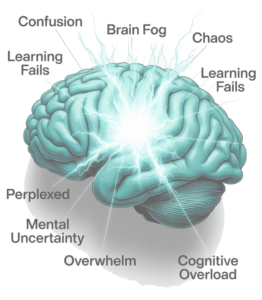
Or maybe it’s quieter than that. Just a feeling that your thinking isn’t quite as sharp as it used to be. Not broken. Just not quite right.
You’re not imagining it. And you’re not alone in it.
What most people find is that the experience is real and recognisable — but the explanations they’ve been offered don’t quite fit. Too medical. Too vague. Or too focused on what to do when what you actually need first is to understand what’s happening.
That’s what this site is for.
Most advice starts in the wrong place
When your thinking feels foggy or your energy doesn’t return, the standard response is to do more.
Sleep hygiene. Productivity systems. Mindfulness. Cold showers. All of it well-intentioned. Some of it occasionally useful. But when the underlying pattern hasn’t been understood, adding more on top tends to add more noise.
The question that actually helps isn’t what should I be doing differently. It’s why is this happening in the first place.
Because the answer to that changes everything. It changes what’s worth trying. It changes how you talk to yourself about it. It changes whether you spend another six months pushing harder at something that was never the problem.
Understanding comes first. Everything else follows from there.
This site does one thing well
ClearThoughtForge exists to explain the patterns behind mental fatigue, lost focus, and unrestorative sleep — in plain language, without overcomplicating it.
No diagnoses. No prescriptions. No lists of things to do before breakfast.
Just clear, honest explanations of what’s likely happening underneath the experience you’re having — and why it makes sense that it feels the way it does.
Most people start by recognising themselves in one of three patterns.
Which of these feels most like you? – Most people recognise themselves in one fairly quickly
Mental fatigue and brain fog
Your thinking feels slow or heavy. You get through the day, but it costs more than it should. By evening, your mind feels spent — even when you haven’t done anything obviously demanding.

Focus and concentration
You sit down to do something and your attention just won’t hold. You’re present, you’re trying — but your mind keeps sliding off. It’s not laziness. Something else is going on.
Sleep and recovery
You get the hours but you don’t get the rest. You wake up feeling like you never quite stopped. Your mind seems to carry the previous day straight into the next one. It’s like the day never quite got a chance to finish.
For people who want to go a little further
Some people who visit this site find that understanding shifts things on its own. Others reach a point where they want to explore what sits beyond it.
For those readers, there’s a separate page where we’ve curated two tools — one for people whose primary experience is daytime cognitive fog, one for people whose primary struggle is overnight recovery. No quick fixes. Just options worth knowing exist.
See what some people explore → Helpful Tools
Wherever you start, you don’t need to figure everything out at once.
Start with what you recognise.
The understanding tends to build from there.