
Start here if you feel mentally drained all the time
There’s a point where it stops feeling like a bad day.
And starts feeling like your default.
It’s gradual. At first you explain it away — a poor night’s sleep, a busy week, too much on. But then it keeps happening. Not just occasionally. Most of the time. It’s there when you wake up. It follows you through the day. And it doesn’t fully go away, even when things go quiet.
Everything feels a little heavier than it should. Thinking takes more effort. Your focus doesn’t last. Clarity always feels just slightly out of reach.
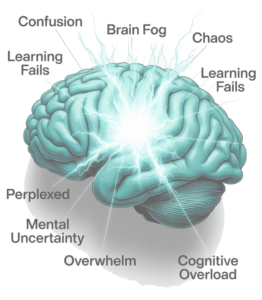
You can still function. You can still get things done. But it never really lifts.
That’s when it starts to feel like something more than tiredness. And that’s when it’s worth looking a little closer. Constant mental fatigue has causes.
Mental Fatigue Isn’t the Same as Being Tired
This is one of the reasons it feels so confusing. It doesn’t behave the way you expect.
Physical tiredness has a clear cause. You rest, and it improves. But mental fatigue doesn’t always follow that pattern. You can sleep well and still wake up foggy. You can have a quiet day and still struggle to think clearly.
Because it’s not just about energy. It’s about how your mind is processing — and whether it ever gets the space to properly reset.
Mental fatigue builds gradually. Small demands. Constant input. Low-level pressure that never fully switches off. On their own, none of these feel significant. But together, over time, they create a strain that eventually becomes your baseline.
And once it becomes your baseline, it stops feeling temporary. It starts feeling permanent. That’s the point where most people start looking for answers.
It Doesn’t Always Show Up the Same Way
This is what makes it hard to explain — and hard to search for. Mental fatigue isn’t one single experience. It shows up differently depending on what’s driving it and how long it’s been building.
Some people feel it as slowness. Others as distance. Others as a flatness where energy and motivation should be. Others notice it most when simple things suddenly feel hard.
The sections below break down eight distinct patterns. You might recognise yourself in more than one — that’s completely normal. But most people find one that sounds closest to what they’re actually experiencing right now.
Start there.
The Fog That Arrives When Work Ends
You finish the day and expect to feel at least slightly clearer. Instead, your mind feels off. Not exhausted enough to sleep, not clear enough to function. Simple decisions take longer. Conversations are harder to follow. The evening that should feel like recovery feels like an extension of the effort.
You might recognise this as:
- A consistent mental blur that arrives around the same time each day
- Simple tasks requiring noticeably more thought than they should
- Feeling present in the evening but not quite switched on
- The fog lifting eventually — but later than it reasonably should
When Thinking Feels Delayed Rather Than Absent
Someone asks you something and the answer takes a beat longer than it should. You lose your thread mid-sentence. You read the same paragraph twice and the second time doesn’t help. It’s not that the thought isn’t there — it’s that reaching it feels like pushing through something.
You might recognise this as:
- Responses arriving a half-second after they should
- Words or names that hover just out of reach
- Following conversations feeling like more work than usual
- The slowness being inconsistent — fine some days, pronounced on others
→ Why Does My Brain Feel Slow?
When the Tiredness Doesn’t Match What You Did
The day wasn’t particularly demanding. Nothing dramatic happened. And yet by mid-morning you’re already running low. The mental exhaustion feels disproportionate — like your mind has used something up that you can’t account for.
You might recognise this as:
- Feeling mentally drained before the day has justified it
- A tiredness that doesn’t improve after rest the way physical tiredness does
- Low-demand days sometimes feeling more depleting than busy ones
- A persistent baseline of heaviness that rarely fully clears
→ Why Am I Always Mentally Tired?
When Simple Things Start Slipping
You forget what you came into the room for. A familiar name disappears the moment you need it. You were about to say something and it’s gone. These aren’t complex things — they’re things you know perfectly well. Which is exactly what makes it so unsettling.
You might recognise this as:
- Forgetting ordinary things that should be immediately accessible
- Information returning later, unprompted, when you’re no longer looking for it
- Simple retrieval taking noticeably longer than it used to
- A creeping worry that this is becoming more frequent
→ Why Can’t I Remember Simple Things Anymore?
When Small Tasks Feel Disproportionately Large
You look at the list. Nothing on it is complicated. You’ve done all of these kinds of things before. And yet there’s a weight to starting that doesn’t match what’s actually being asked. The gap between deciding to do something and actually beginning it has become strangely wide.
You might recognise this as:
- An internal negotiation before even ordinary tasks
- The anticipation of tasks feeling harder than the tasks themselves
- Some items on the list triggering the heaviness more than others, with no obvious logic
- Completing things feeling like relief rather than just normal progress
→ Why Do I Feel Overwhelmed by Small Tasks?
When You’re There But Not Quite Present
You’re in the conversation. You’re following it. But there’s a slight remove — like you’re watching yourself participate rather than fully being in it. You go to do something routine and realise midway that you drifted. You look at something without fully taking it in. Present, but not quite landed.
You might recognise this as:
- A persistent sense of being slightly behind the moment
- Familiar things registering but not fully connecting
- The detachment lifting briefly during genuinely engaging moments, then returning
- Difficulty explaining to others what’s wrong, because nothing is wrong — it’s just off
→ Why Do I Feel Spaced Out All the Time?
When Responses Stop Arriving the Way They Should
Something happens that should produce a feeling — good news, something difficult, a moment that should matter — and the expected response either doesn’t come or arrives so faintly you can barely register it. You’re not unhappy. You’re not disengaged. You just feel unusually flat. Like the volume has been turned down on your own internal experience.
You might recognise this as:
- Emotional responses that feel muted or delayed
- Knowing something should feel significant without being able to feel it properly
- Moments of genuine feeling still arriving occasionally — which confirms the capacity is still there
- A flatness that’s hard to describe because it’s not sadness, just absence
→ Why Do I Feel Mentally Numb?
When Everything Costs More Than It Should
It’s not that things are hard. It’s that everything — even simple, manageable, completely ordinary things — seems to require more than you have available right now. You know you need to do it. You intend to do it. You might even want to do it. And yet the resistance between intention and action has become something almost physical.
You might recognise this as:
- Simple tasks carrying a weight that doesn’t match their actual difficulty
- Pushing through being possible but leaving you noticeably more depleted than expected
- The effort feeling worse on days that looked easier from the outside
- A cycle where the effort of doing things makes everything feel harder to start
→ Why Does Everything Feel Like Too Much Effort?
These Patterns Often Overlap
You might recognise yourself in more than one section. That’s completely normal — and it matters.
These aren’t isolated problems with separate causes. They’re different expressions of the same underlying experience: a mind that’s been carrying more than it’s had space to properly process, for long enough that it’s started to show in multiple ways simultaneously.
Understanding which pattern feels most familiar right now is a useful starting point. Not because it leads immediately to a fix — but because clarity about what’s actually happening tends to make it feel less random. Less like something is permanently broken. More like something that can be understood.
And understanding, it turns out, is usually where things start to shift.
This Isn’t About Pushing Through
The instinct when mental fatigue becomes persistent is to try harder. To push. To add more discipline or more structure and see if that shifts things.
But if the fatigue is coming from a mind that’s been running at sustained capacity without adequate recovery — which is what most of these patterns point toward — then pushing harder adds more demand to an already stretched system.
The more useful starting point is understanding what’s actually happening. Because once the pattern is clear, it stops feeling random. It starts feeling like something with a source. And things with a source tend to have a direction of travel — away from where you are now.
The articles in this hub are written to help with exactly that. Not to prescribe, not to diagnose. Just to help you understand, in plain human language, what might be going on and why.
Explore Other Patterns
Mental fatigue and brain fog rarely exist on their own. If what you’re experiencing connects to difficulty switching off, feeling unrestored after sleep, or a mind that won’t quiet down when it should: → Why Can’t I Switch Off or Feel Rested? — Start Here
If the mental fatigue connects more to difficulty focusing, concentrating, or sustaining attention on tasks during the day: → Why Can’t I Focus Anymore? — Start Here
When understanding the pattern is a useful first step and you’re ready to explore what others have found helpful from there: → Tools That Can Help
Brain fog and mental fatigue can stem from very different places. The self assessment takes two minutes and helps identify which experience is most relevant to you.