
If your thinking feels slow, foggy, or inconsistent, you’re not alone.
Mental fatigue, brain fog, and lack of clarity are some of the most common issues people face today—but most advice only scratches the surface.
This guide breaks down what’s really happening—and how to fix it.
Start here: Fix your mental clarity
Why You Feel Mentally Drained
Brain Fog After Work
Why Your Brain Feels Slow
How to Clear Brain Fog Naturally
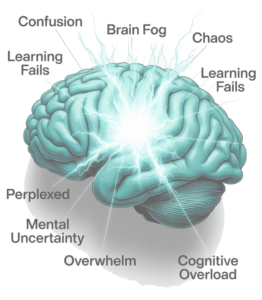
What is brain fog really?
Brain fog isn’t a single condition—it’s a signal.
It’s your brain telling you something isn’t working properly.
This could be mental overload, lack of recovery, or deeper cognitive fatigue.
The key isn’t just pushing harder…
it’s understanding the causes.
Why most solutions don’t work
Most advice focuses on doing more—
more discipline, more effort, more routines.
But if your brain isn’t functioning properly, none of that works.
Real improvement comes from addressing
how your brain is operating—not just what you do.
To fix brain fog, you first need to understand what’s causing it.
Understanding the Problem
Why do I feel mentally drained
Why does my brain feel slow
Mental overload symptoms
Fixing Brain Fog
How to recover from mental fatigue
How to reset your brain
Brain fog after work
There’s More than Just Habits
Beyond routines and productivity tips, there are tools designed to support mental clarity and cognitive performance.
We break down what actually works—and what doesn’t.
Improving mental clarity isn’t about doing more.
It’s about working with your brain—not against it.
That’s what this section is here to help you do.
Tools That Can Help
At some point, understanding the problem isn’t enough—you need something that actually helps shift it.
Not in theory, but in practice.
There are tools designed specifically to support mental clarity, focus, and cognitive recovery. Some work with your brain directly, rather than relying on more effort or discipline.
One approach that’s been gaining attention is audio-based stimulation—designed to help your brain move out of overloaded states and into clearer, more focused ones.
It’s not a quick fix, and it’s not something you “force.” But used correctly, it can help reduce the constant mental friction that builds up over time.
Explore tools designed to support mental clarity