
When understanding isn’t quite enough on its own
There’s a particular kind of frustration that comes after the penny has dropped.
You’ve read enough to recognise what’s happening. You can name the patterns — the fog that won’t lift, the sleep that doesn’t restore, the thinking that feels slightly out of reach. Understanding arrived.
And yet the experience itself hasn’t fully shifted.
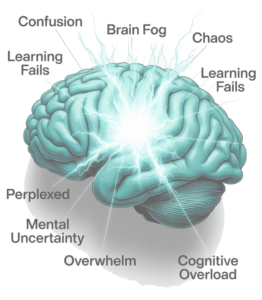
That’s not unusual. Understanding changes how you see things. It doesn’t always change how things feel. For some people, that gap is where a different kind of curiosity begins — not desperate, not grasping, just a quiet interest in what else might help.
This page exists for that moment.
Two tools. Two different experiences.
The people who find this site aren’t all experiencing the same thing.
Some are struggling primarily during the day — thinking that feels slower than it should, focus that slips, a kind of mental friction that makes even straightforward tasks feel effortful.
Others are struggling primarily overnight — sleep that happens but doesn’t restore, mornings that feel like continuations rather than fresh starts, a mind that never quite finishes processing the day before.
Both experiences are real. But they point in different directions. The two tools curated here reflect that difference.
Read both. Most people recognise themselves in one fairly quickly.
If your main experience is daytime — thinking, focus, mental clarity
You’re not distracted in an obvious way. You’re present, you’re trying, you’re doing what you usually do. But something in the background feels slightly off.
Thoughts are a little harder to hold. Decisions take more out of you than they should. The sharpness you used to take for granted isn’t quite there.
It’s not dramatic. It’s just — noticeable.
What some people find in situations like this is that trying harder doesn’t reliably close that gap. The issue isn’t effort. It’s something underneath the effort — the way the mind is operating before you even begin.
One approach that a growing number of people have been exploring uses structured audio — specifically, patterns designed to gently influence how the mind settles into focused states. It’s not music, and it’s not a concentration technique. It works differently — quietly, in the background, while you get on with things.
It won’t suit everyone. But for people whose primary experience is daytime cognitive fog and mental friction, many find it worth exploring.
See how people are using this approach
If your main experience is overnight — sleep that doesn’t restore
You’re getting the hours. You’re not lying awake all night. Sleep is happening.
But you wake up and feel — similar. Not refreshed. Not clear. Just continuing from where yesterday left off, as if something in the night didn’t quite complete.
The gap here isn’t usually about sleep itself. It’s about what happens during sleep — whether the mind actually finishes processing, settles fully, and carries out the kind of overnight reset that leaves you feeling genuinely different in the morning.
When that process is incomplete, it tends to show up in recognisable ways: persistent mental fatigue that sleep doesn’t fix, a subtle fog that’s there from the moment you open your eyes, a sense of never quite catching up.
What some people explore in this situation isn’t more sleep — it’s deeper sleep. Specifically, support for the overnight recovery process itself, and the biological mechanisms that allow the mind to reset properly rather than just pause.
One approach that people in this situation often find relevant focuses on supporting those deeper overnight processes — quietly, without anything you need to actively do. Many people who experience unrestorative sleep find that this is the direction worth exploring first.
See what people explore for deeper reset
You don’t need to decide anything right now
This isn’t a quiz with a right answer. It’s not a prescription. Nobody here knows your situation better than you do.
The most useful thing this page can do is help you recognise which experience feels more like yours — and point you toward something that others in that situation have found worth looking into.
Both tools are curated on the same basis: relevance to the experiences covered on this site, and a genuine fit with what readers here tend to be dealing with. Neither is presented as a solution. Both are presented as something worth knowing exists.
Start with whichever felt more like you.
Related reading
Why Can’t I Switch Off or Feel Rested? Why Can’t I Focus Anymore? Why Do I Feel Mentally Drained All the Time?