
Start Here if You Can’t Switch Off at Night or Feel Rested
Sometimes it’s not about how much sleep you get.
You go to bed. You wake up. The hours pass like they’re supposed to.
But something still feels off.
You might wake up tired.
You might feel flat halfway through the day.
Or strangely, you might feel clearer at night than you do in the morning.
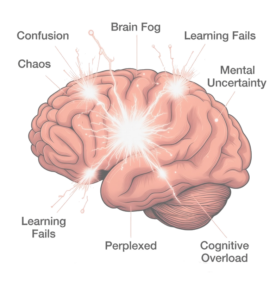
And that’s where it gets confusing.
Because it stops feeling like a simple sleep issue…
and starts feeling like something deeper in how your mind switches on—and off.
It Doesn’t Always Feel Like One Problem
Sleep and rest don’t show up in just one way.
For some people, it’s mornings that don’t feel like a reset. For others it’s broken sleep, or sleep that feels light, or sleep that doesn’t seem to do anything useful at all. For others still, it’s the inability to relax even when nothing is wrong — the persistent sense of being on when you’re supposed to be off.
These aren’t completely separate experiences. They’re different ways the same underlying patterns can show up.
You might recognise yourself in more than one section below. That’s completely normal.
When Mornings Don’t Feel Like a Fresh Start
There’s an expectation that mornings should feel like a reset. A clean slate. A clear starting point.
But that’s not always what happens.
Sometimes you wake up and feel like you’re simply continuing from where you left off. Not refreshed — just resumed. Or even slightly heavier than before.
You might recognise this as:
- Waking up already tired before the day has asked anything of you
- Feeling like your mind hasn’t reset overnight
- Taking a long time before you feel mentally present
- A slower, heavier start than feels normal
Read more: Why Do I Wake Up Tired Every Day Why Do I Feel Worse After Sleeping
When Your Sleep Doesn’t Hold Through the Night
Falling asleep isn’t always the issue. You can drift off fine — but staying asleep is a different thing entirely.
You wake up. Maybe once, maybe several times. And each time, it feels like the sleep didn’t quite hold you. Like something keeps pulling you back to the surface even when nothing is wrong.
You might notice:
- Broken or fragmented sleep that leaves you feeling unrestored
- Waking easily from even light sounds or no sound at all
- Lying awake in the early hours with a mind that’s suddenly active
- Struggling to settle back into proper sleep once you’ve surfaced
Explore this further: Why Can’t I Stay Asleep
When Energy Drops and the Day Falls Apart Mid-Way
Even if the morning feels manageable, something can shift later on. You’re moving through your day — and then suddenly your energy drops. Not gradually. Just noticeably. Like a switch.
You might recognise:
- An afternoon crash that arrives without warning
- Slower, heavier thinking later in the day
- Tasks that felt manageable in the morning feeling effortful by mid-afternoon
- A gap between what you intended to do and what you could actually manage
Read more: Why Do I Crash in the Afternoon
When You Can’t Switch Off — Even When You Should Be Able To
This is where things get quietly complicated. The day is over. There’s nothing urgent. Everything is fine. And yet something won’t let you properly rest.
You’re not worried exactly. You’re not in crisis. You’re just… on. Still running. Still humming at a frequency that has no obvious source and no easy off switch.
You might notice:
- Lying down exhausted but finding your mind suddenly racing
- Feeling on edge in the evening for no reason you can name
- An inability to relax even when the conditions are perfect
- Reaching the end of a holiday or a day off feeling no better than when you started
Explore these patterns: Why Does My Mind Race at Night Why Do I Feel on Edge for No Reason Why Can’t I Relax Even When I Have Nothing to Do Why Can’t I Enjoy My Time Off Anymore
When Your Mind Feels Clearer at Night Than During the Day
This is the pattern that often surprises people the most. Instead of feeling your best earlier in the day, you feel clearer later. More focused. More settled. More like yourself — at exactly the time you’re supposed to be winding down.
You might notice:
- Easier, more connected thinking in the evening
- Better concentration and creativity after 9pm
- A sense of calm and presence that wasn’t available all day
- Frustration that your best hours arrive when it’s too late to use them
Explore this pattern: Why Do I Feel Mentally Better at Night
These Patterns Often Overlap
You might recognise yourself in more than one section here. That’s normal — and it matters.
These aren’t isolated problems with separate causes. They’re different expressions of the same underlying experience: a mind that’s struggling to move cleanly between doing and resting, between being on and being genuinely off.
Sometimes it shows up in the mornings. Sometimes in the middle of the night. Sometimes in the middle of a holiday that should be restorative and somehow isn’t.
Understanding which pattern feels most familiar is a useful starting point — not because it leads immediately to a fix, but because clarity about what’s actually happening tends to make it feel less random. Less like something is permanently wrong. More like something that can be understood.
This Isn’t About Fixing Sleep
It’s easy to jump straight to solutions. Try this, change that, improve your routine.
But before any of that, there’s something more useful: understanding what you’re actually experiencing. Because once you can recognise the pattern clearly, it stops feeling like it’s happening to you at random.
The articles in this hub are written to help with exactly that. Not to prescribe. Not to diagnose. Just to help you understand — in plain, human language — what might be going on, and why.
A Quiet Closing Thought
Once you start recognising these patterns, things tend to make a little more sense. Not all at once. But enough to feel like what you’re experiencing isn’t random — and isn’t something you’re imagining.
It’s just something that hasn’t been clearly explained before.
And that, sometimes, is where everything starts to shift.
Explore Other Patterns
If the tiredness and inability to switch off is also affecting your ability to focus and concentrate during the day, this cluster explores that side of the experience: → Why Can’t I Focus Anymore? — Start Here
If what you’re experiencing feels closer to a persistent mental heaviness or brain fog that doesn’t lift regardless of rest: → Why Do I Feel Mentally Drained All the Time? — Start Here
When understanding the pattern is the right first step — and you’re ready to explore what others have found helpful from there: → Tools That Can Help
If you’re unsure whether what you’re experiencing is a sleep issue or something else entirely, the self assessment can help you identify which experience is actually driving things for you.